



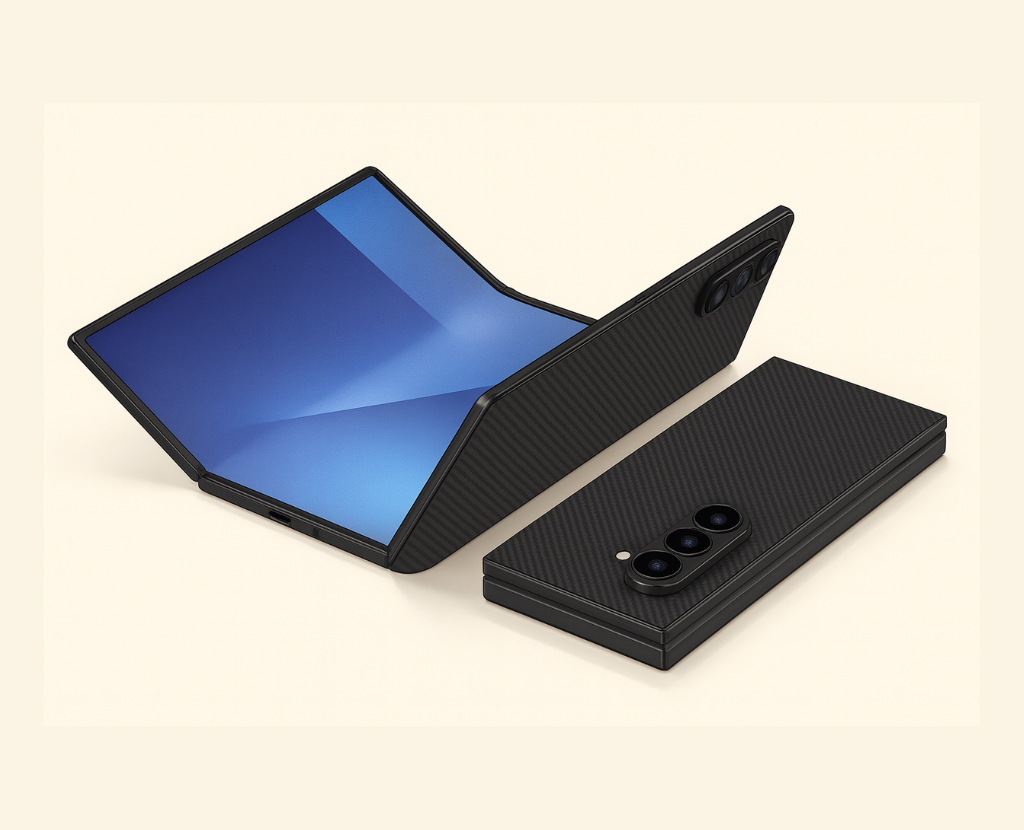
Samsung has officially introduced its first multi-folding smartphone, marking one of the most significant design upgrades in the foldable category since the launch of the original Galaxy Fold. The new device, widely referred to as the Galaxy Z TriFold, features a triple-panel display that folds twice, transforming seamlessly between a compact smartphone and a tablet-sized screen. This marks a pivotal shift in the foldable market and signals much tighter competition in the years ahead.
A New Era for Foldables: What the TriFold Brings
The standout feature of Samsung’s new device is its innovative dual-hinge mechanism that allows the phone to unfold into a large, 10-inch display. When fully opened, it becomes substantially larger than any of Samsung’s previous foldable phones, offering a near-tablet experience without carrying a separate device.
When folded twice, it fits comfortably in the hand like a traditional smartphone. A single fold reveals a midsized panel suitable for typical tasks, while the complete unfolding provides full screen estate for multitasking, entertainment, productivity, and creative work. The design also ensures that the main flexible display is protected on the inside when the phone is fully folded, enhancing durability and portability.
Samsung has spent nearly a decade refining its foldable technology, and the TriFold is being positioned as the culmination of that engineering evolution.
Key Features and Enhancements
1. Larger, Versatile Display
The TriFold’s 10-inch folding display is its biggest draw. It supports multiple window layouts, drag-and-drop functionality, and more space for apps to run side-by-side, catering to users who need a flexible work-consumption setup.
2. Powerful Battery Setup
Samsung has incorporated its largest foldable battery to date. The battery is split across the three panels to maintain device balance and improve thermal efficiency. Fast-charging support ensures the phone reaches about half its capacity in roughly half an hour.
3. Premium Performance
The device is powered by a flagship-grade chipset, high-speed RAM, and enhanced cooling systems optimized for the expanded screen. Samsung has also improved the hinge materials and internal architecture to withstand repeated folding.
4. Refined Dual-Hinge Design
The new hinge system is designed to be slimmer, stronger, and more fluid. It allows the phone to fold in a “Z” shape and reduces the overall thickness when folded. Samsung claims the hinge is engineered to provide long-term reliability even with frequent folding.
Release Timeline and Market Rollout
Samsung plans to launch the Galaxy Z TriFold first in South Korea, with preorders beginning shortly, followed by the official sale on December 12, 2025.
After the domestic launch, the device will roll out to additional markets:
- China
- Singapore
- Taiwan
- United Arab Emirates
A U.S. release is expected in early 2026, marking Samsung’s global expansion strategy for this new category.
Why This Launch Matters
1. Samsung Raises the Innovation Bar
For years, foldables have largely been limited to two formats: book-style folds and clamshell-style flippers. The TriFold expands possibilities by introducing a triple-panel concept, turning one device into three functional modes. It demonstrates how mobile devices could evolve from simple smartphones into more adaptable, multi-purpose gadgets.
This marks the first time a major global smartphone manufacturer is putting a multi-folding experience into commercial production, a move that may push competitors to release their own multi-panel devices.
2. The Competitive Landscape Is Heating Up
The foldable market has grown quickly, with Chinese brands experimenting aggressively with new form factors. Some have already showcased tri-fold prototypes, signaling that Samsung’s entry arrives at a strategically important time. Meanwhile, Apple is widely rumored to be exploring foldable concepts, suggesting that competition will intensify in the next 12–24 months.
Samsung’s TriFold serves as both a product and a message: the company intends to remain the leader of the foldable segment even as rivals close in.
Challenges the TriFold Must Overcome
1. High Pricing
The TriFold’s price, equivalent to well over $2,000, targets a niche audience rather than mass users. While early adopters and tech enthusiasts may embrace it, the cost could limit widespread acceptance in the short term.
2. Durability Questions
Any first-generation product faces scrutiny, and a dual-hinge mechanism introduces more complexity. Despite Samsung’s confidence in its refined engineering, consumers and analysts will be watching closely to see how the device performs after months of use.
3. Limited Mass-Market Appeal
Foldables, despite growing buzz, still represent a small portion of global smartphone sales. Until prices drop and the technology matures further, devices like the TriFold may remain specialized flagship showcases instead of mainstream drivers.
4. Production and Supply Constraints
Manufacturing a tri-fold device at scale poses challenges, especially regarding yield, hinge precision, and flexible display quality. Experts suggest Samsung may initially keep production volumes conservative to monitor performance and demand.
User Experience: Who Will Benefit the Most?
1. Productivity-Focused Users
Professionals who work heavily on mobile devices, multitaskers, and users who rely on split-screen workflows may appreciate the larger display and versatility. The TriFold’s ability to transform into a mini-tablet makes it appealing for presentations, content creation, and on-the-go productivity.
2. Entertainment & Creative Consumers
The larger screen is ideal for:
- watching movies
- reading
- gaming
- sketching or digital drawing
- editing media
It essentially becomes a compact entertainment device without carrying a full-size tablet.
3. Tech Enthusiasts and Trendsetters
As with any flagship innovation, early adopters and fans of cutting-edge tech will be drawn to the TriFold’s unique design and engineering.
Impact on the Smartphone Industry
The Galaxy Z TriFold could influence the direction of future mobile devices in several ways:
- Encourage brands to invest more in multi-fold formats.
- Push tablet-smartphone hybrids into the mainstream.
- Trigger price competition once other manufacturers follow suit.
- Accelerate user interest in flexible display technology.
If successful, the TriFold may help establish new device categories and change expectations about what a smartphone should be.
Even if it remains niche, its arrival marks a significant moment: Samsung has demonstrated that multi-fold technology is no longer just a concept, it is ready for real-world use.
Conclusion
Samsung’s Galaxy Z TriFold marks a bold step forward in foldable innovation. With its triple-panel design, expanded display, enhanced battery, and refined hinges, the device pushes foldable technology into new territory. Though priced for a selective market and still facing durability and scaling challenges, the TriFold stands as a major milestone for Samsung and the broader industry.
It may not become the everyday device for most users just yet, but it undeniably sets the stage for the next evolution of mobile devices, where phones, tablets, and future hybrid gadgets merge into transformative, shape-shifting designs.
I hope you find the above content helpful. For more such informative content, please visit TechnologyXpertise.